What is a cleanout and why does the plumber keep asking if I have one?
A cleanout is a capped pipe fitting that gives a plumber direct access to the sewer line. It usually looks like a round plug, three or four inches across, sitting on a short stub of pipe. You will often find one in the basement near the main stack, in a crawlspace, along an outside wall or in the yard near the foundation.
The plumber asks because it decides how the job is done. With a cleanout, a cable machine or hydro jetter goes straight into the line. Without one, the equipment has to go in through a toilet, a floor drain or the roof vent. That can mean pulling a toilet, and it limits how far the machine travels and how well a camera can see.
Safe homeowner check: find the cap and note where it is. Do not unscrew it if the house drains are backed up. Water can be standing behind the cap, and it will come out.
Stop running water and call now if the cleanout is wet or leaking, or if several drains in the house are backing up together. That points to a blockage in the main line.
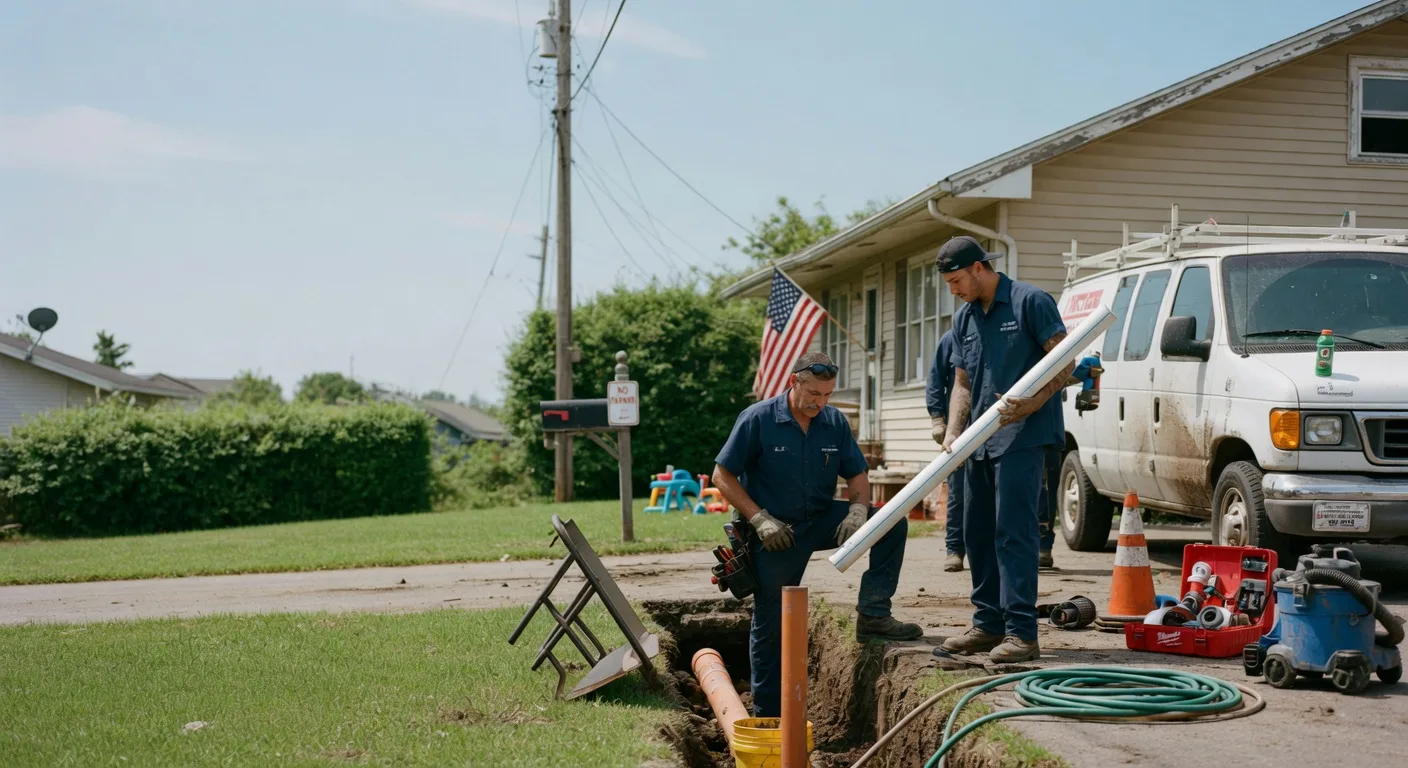
If your home has no cleanout, adding one is often part of the job. What it costs depends on access, how deep the line is, how much has to be dug or cut open, and whether a permit applies.
Expert Plumbers Co is a referral service. Call (380) 262-9173 and we will connect you with a plumber serving Blue Grass, IA for Drain Cleaning.
A few practical points help when a cleanout is involved. The cap can be stuck from years of rust or paint, and forcing it with a long wrench can crack the fitting, so leave a stubborn one to the plumber. Keep the area around it clear of storage, snow, soil or landscaping so the crew can reach it quickly. In older homes the cleanout may have been buried when the yard was regraded, or covered by a patio or flooring, and finding it can take some probing. Newer homes usually have one near the foundation or at the property line, sometimes with a green or black cap flush with the lawn. If a plumber can find or install one, later cleanings and camera inspections become simpler and less disruptive, because the equipment enters the line at a planned point and nothing indoors has to be disturbed or removed.
Does hard water cause drain problems, or only water heater problems?
The bathroom sink used to run fine. Now it drains a little slower each month. That slow creep is the sign of scale, not a clog.
Hard water does more than coat a water heater. Minerals from the supply side leave a chalky layer inside a trap. In a bathroom line they bind with soap residue into a hard, grey film. The bore narrows a fraction at a time, so you notice a gradual slowdown rather than a sudden blockage.
Old cast iron is a different problem. Inside drain pipe that has been in the ground or a wall for decades, rust forms lumpy mounds called tubercles. These are not hard-water minerals. They are the pipe corroding from within, and they snag grease and paper.
The two tools do different work. A cable punches a hole through the build-up. Water drains again, but the scale stays on the wall and the line narrows again. Hydro jetting strips the wall back to the pipe surface.
Jetting old iron hard without looking first is a gamble, because thin, flaking pipe can fail under pressure. That is why a camera inspection comes first on old iron. It shows wall condition and cracks before anyone sets the pressure.
Safe homeowner check: find out whether one fixture is slow or every drain in the house is, then clean the visible stopper and trap.
Stop running water and call now if several drains slow together, or water backs up at a floor drain. One slow bathroom sink is usually a cable or trap job. A whole-house slowdown in old iron often needs a camera first and possibly jetting.
Expert Plumbers Co is a referral service. We connect you with an independent local plumber in Blue Grass, IA. Call (380) 262-9173.
A water softener changes the picture a little, and it is worth telling the plumber if you have one. Softened water leaves less mineral scale, but it can feel slippery and does not stop soap and hair from building up on the pipe wall. If your water is hard and you have no softener, the mineral film inside traps and short branch lines is the main cause of the slow creep. A simple habit helps: use a hair catcher in the tub and basin, and rinse the sink with hot tap water after use so soap does not cool and settle on the wall. Do not rely on vinegar or store-bought descalers to clear a drain, as they only treat the surface. In newer homes with plastic pipe, scale is mostly a trap and fixture issue. In older homes with iron or galvanized pipe, scale and corrosion together can narrow a line enough that replacing a section is more sensible than repeated cleaning.
The laundry sink in my basement fills up when someone uses the drains upstairs. Why?
A basement laundry sink is often one of the lowest open drains in the house. When it fills with water from upstairs, that water is coming back up the main drain because the line below is blocked or too slow to carry it away.
Everything upstairs drains down through a vertical stack and into the main line that leaves the house. If that main line is partly blocked by roots at a clay joint, a bellied section holding water, or grease and wipes that have built up, the flow stops short and rises to the lowest point. That is the basement.
Check whether the floor drain, a basement toilet or a shower shows the same thing. If the laundry sink fills when you flush an upstairs toilet or run the washing machine, the main drain is the likely cause. If it only happens with the dishwasher or one bathroom, the blockage may be on a branch line instead.
Safe checks you can do: stop running water in the house for an hour and see whether the level drops. Find the cleanout, a capped pipe near the floor or outside wall, and note where it is for the plumber, but do not open it while the line is full. Do not run the washing machine or take showers to test it, and do not use chemical cleaner.
Stop all water use and call now if the water in the sink is dirty or smells, if it is rising, or if it spills over the rim. Sewage in a basement is a health hazard, so keep people and pets away and do not touch it without gloves.
A cable machine can clear a soft blockage in the main line from the cleanout. If it returns, or if the cable stops at the same spot, a camera inspection shows whether roots, a bellied pipe or a failed sewer lateral is behind it. Hydro jetting clears grease and roots more thoroughly than a cable, and a damaged line may need a repair or replacement section.
Cost depends on access to the cleanout, how far the blockage sits, whether roots or a collapsed pipe are involved, and how much has to be dug or opened.
Expert Plumbers Co can connect you with an independent local plumber in Blue Grass, IA when you call (380) 262-9173.
Water shows up around the base of the toilet after flushing. Is that the drain or the seal?
"There is water around the base of my toilet after I flush." Water at the floor can come from three places, and only one of them is the drain.
The most common cause is a failed seal. A toilet sits on a wax ring or a rubber seal that joins it to the flange, the fitting on the floor drain. If the ring is crushed or the toilet rocks, water escapes at the base during the flush. A loose bolt, a cracked flange or a flange set too low can do the same.
A drain problem is the other case. If the toilet is partly blocked, the flush water slows and rises, and it can push out at a weak seal. Grease build-up, a bellied line holding water, or root intrusion at a clay joint can all do this.
Here is the test. If only this toilet leaks and every other drain runs clean, think seal or flange. If the bowl drains slowly, gurgles, or the tub and floor drain are also slow, think drain. If every drain in the house is backing up, the main line or sewer lateral is involved.
Safe homeowner check: Flush and watch where the first drop appears. Press the toilet by hand to see if it rocks. Check the supply line and shutoff valve for drips. Look at the bowl: does it drain quickly or slowly? Do not over-tighten the closet bolts, because porcelain cracks.
Stop running water and call now if the water on the floor smells of sewage, the toilet will not drain or the bowl rises, other fixtures are backing up, or water is coming through a ceiling below.
A cable machine is enough for a toilet blocked by a clog close to the bowl. A seal or flange job is a reset, not a drain job: the toilet is lifted and a new ring and fittings go in. If the drain keeps slowing, a camera inspection can show roots or a belly, and hydro jetting is used for grease or scale coating the pipe wall.
Expert Plumbers Co is a referral service. We connect you with an independent local plumber in Blue Grass, IA. Call (380) 262-9173.
Ask the plumber to say whether the problem was the seal, the flange or the drain, and what they checked. Ask if the subfloor is wet or soft, since that can widen the work. Cost depends on access, the parts or materials needed, how much has to be opened up or removed, and any permit or code requirement.
Our cabin or second home sat empty for months and now the drains smell and run slowly. Why?
You open the cabin for the first time in months and the drains smell like a sewer and the water creeps away.
Every fixture has a trap, the curved section that holds a little water to block sewer gas. With no use, that water evaporates. Once the seal is gone, gas comes straight up the drain. The film left in the pipe also changes while the house sits. Soap, grease and food residue dry and harden on the pipe wall, so the first heavy use narrows the line and water slows down. Then there is the line itself. A vacant house can still have roots working into a clay or cast iron joint, and nobody was flushing them back with daily flow.
If one sink or tub is slow and the others are fine, the problem is probably local to that fixture, its trap or its branch line. If every drain is slow, several fixtures gurgle, or the toilet bubbles when you run the washer, the blockage is further down, in the main line or the lateral to the street.
Safe homeowner check: run water in every fixture for a couple of minutes, including rarely used ones, to refill the traps. Pour a cup of water into floor drains. If the smell fades and the flow picks up after a day or two of normal use, dried traps and loosened residue were likely the whole story.
Stop running water and call now if wastewater comes up in a tub, shower or floor drain, if the toilet will not clear, if the smell stays strong after the traps are filled, or if you see wet floors, stained ceilings or sagging drywall.
A cable machine is enough when the clog is residue or a soft plug in one branch. If the line stays slow after cabling, if roots are suspected, or if grease has coated the full pipe wall, the plumber will usually recommend hydro jetting, which scours the pipe wall with high pressure water. A camera inspection settles the question of roots, a belly holding water, or a failed lateral.
Expert Plumbers Co is a referral service. We connect you with an independent local plumber in Blue Grass, IA. Call (380) 262-9173.
Before you book, tell the plumber how long the house sat empty, whether it was winterized, and which drains are affected. Ask whether they plan to cable, jet or run a camera first, and what they will do if the camera shows roots or a damaged section. The scope depends on access to the line, the parts or pipe needed, how much has to be opened up, and whether a permit or code step applies to a repair.